
Shopping Basket
Some products are limited in stock
You have no products in the quote basket yet.
Some products are limited in stock
You have no products in the quote basket yet.
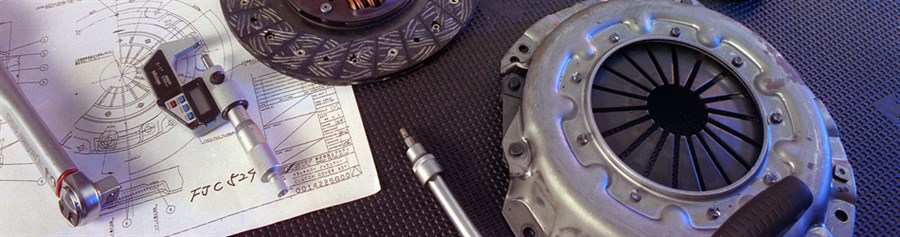
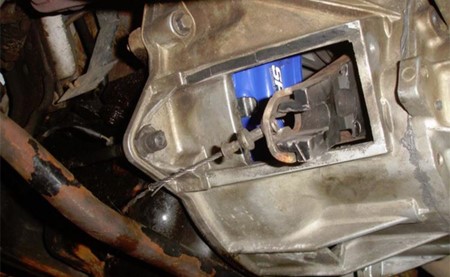
Before removing the old clutch assembly, check that the hydraulic release system or mechanical (cable or rods) release system is in correct working order. Replace any worn parts.
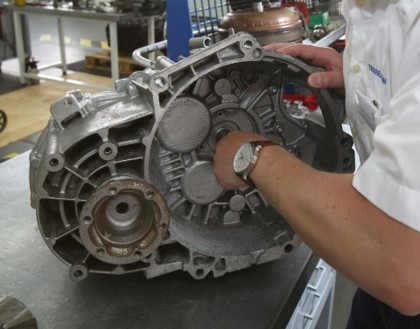
Prior to installing a new clutch, you have to clean the inside of the bell housing as well as all components of the clutch actuation system, e.g. the clutch release fork, the guiding sleeve for the clutch release bearing, and also the transmission input shaft including the multi-gear spline. This is the only way to identify potential signs of wear on these parts which adversely affect the release behavior of the new clutch. If such signs are identified, the described components must be replaced as well.
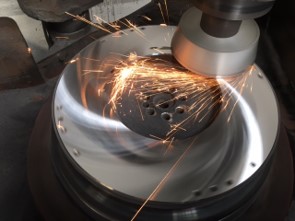
Ensure the flywheel is in good condition and free of cracks, heat damage and scoring. Replace or re-machine to within original specification.
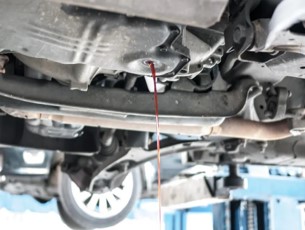
Make sure there is no oil or other fluid leaks from either the engine or the gearbox. Check for oil leaks on the gearbox input shaft and rear main bearing oil seals on the engine.
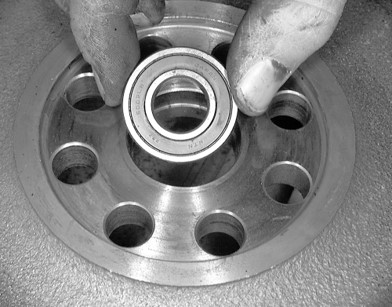
Replace the pilot bush or bearing in the flywheel.
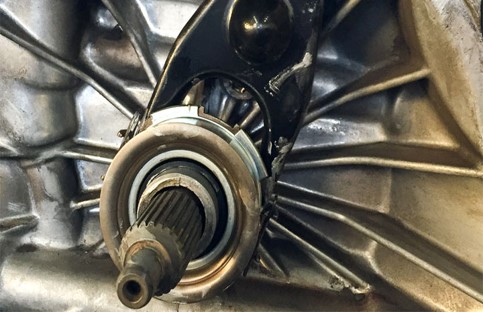
Check release system for wear or damage and replace if necessary.
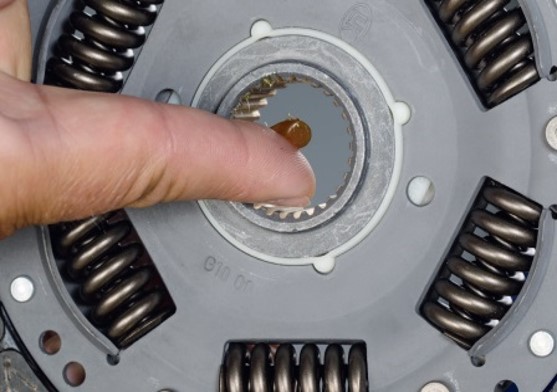
Apply the equivalent of one drop of grease evenly to the hub splines of the clutch disc and to the spines of the transmission input shaft. Slide the clutch disc onto the transmission input shaft, moving it back and forth along the full length of the splines repeatedly. Remove and rotate the disc, and slide it back into place again as above in two other angular orientations. In order to avoid clutch judder remove excess grease from outside of the spline and clutch linings must be kept perfectly clean. For this reason, we recommend to additionally clean the friction surfaces of the flywheel and the pressure plate.
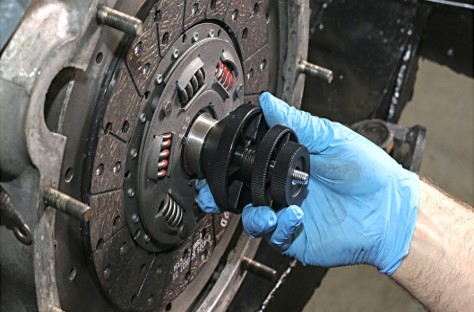
Centralise the driven plate with an alignment tool or spare gearbox input shaft and tighten the cover assembly bolts in the correct crosswise sequence.